
Whole House Water Filter Installation in Utah County, UT
A whole house water filter treats water where it enters your home, so every faucet, shower and appliance gets filtered water. For Utah County homes on city water, the usual goal is sediment and chlorine taste and odor. A filter does not soften hard water, so many homes pair it with a softener. Ease Home Services quotes from home by phone or video.
What a whole house water filter does (and doesn’t do)
A whole house water filter is “point-of-entry” treatment. It goes on your main water line, after the meter and before the water heater, so every tap, shower and appliance in the home gets treated water. It’s also called a whole-home filtration system.
What it does: a sediment stage catches sand, silt and scale flakes. A carbon stage improves chlorine taste and odor, which is what most people on city water notice first. Specialty media can handle specific issues like iron or a sulfur smell.
What it doesn’t do:
- It doesn’t soften hard water. Calcium and magnesium pass right through. For that you need a water softener.
- It doesn’t replace reverse osmosis for drinking water. Dissolved solids (TDS) aren’t meaningfully reduced by a carbon filter. For drinking and cooking water, see reverse osmosis drinking water systems.
Utah County water: what’s in it and what a filter should target
All six south Utah County towns draw on groundwater from springs and wells. City water is disinfected, and that’s why many homes notice a chlorine taste or smell. Disinfection by-products (TTHM) show up in every report, far below the federal limit of 80 ppb. A carbon filter is the usual way to deal with that chlorine taste and odor at every tap.
Hardness is the bigger day-to-day issue. Payson City publishes 11.7 gpg, and a 2018 Mapleton City study found about 11.1 to 18.7 gpg. Both are “very hard” on the USGS scale. A filter won’t touch that, which is why so many homes here pair a filter with a softener.
A 2018 Mapleton City study also found manganese above the aesthetic limit at two sites (which can cause brown or black staining) and a sulfur odor at one well. That’s older data, but those are the kinds of issues specialty filter media is built for. See well water treatment and city water treatment.
| City (report) | Source water | TDS (ppm) | TTHM (ppb; limit 80) | Hardness published? |
|---|---|---|---|---|
| Spanish Fork (2025) | 5 springs + 2 wells | 272–724 | 1.52–3.44 | No |
| Springville (2025) | 4 springs + 7 wells | 240–476 (2024 sampling) | 0–2.4 | No |
| Salem (2024) | 2 wells + 2 springs | 280 (2022 sampling) | — | No |
| Santaquin (2025) | 4 springs + 2 wells | 264 | 5–6 | No |
| Payson (city page) | 4 wells + 8 springs | — | — | Yes: 11.7 gpg |
| Mapleton (2018 study) | Springs + wells | 172–460 mg/L | — | Yes: about 11.1–18.7 gpg (2018) |
All figures are from each city’s own report and are within federal limits. “—” means we didn’t use a figure from that report.
TDS is not hardness, and it isn’t what a whole house carbon filter is for. If dissolved solids are your concern, reverse osmosis at the kitchen sink is the tool for the job.
Types of whole house water filters
Sediment filters
These catch sand, silt and scale flakes. They’re often used as a pre-filter to protect the stages after them.
Carbon filters
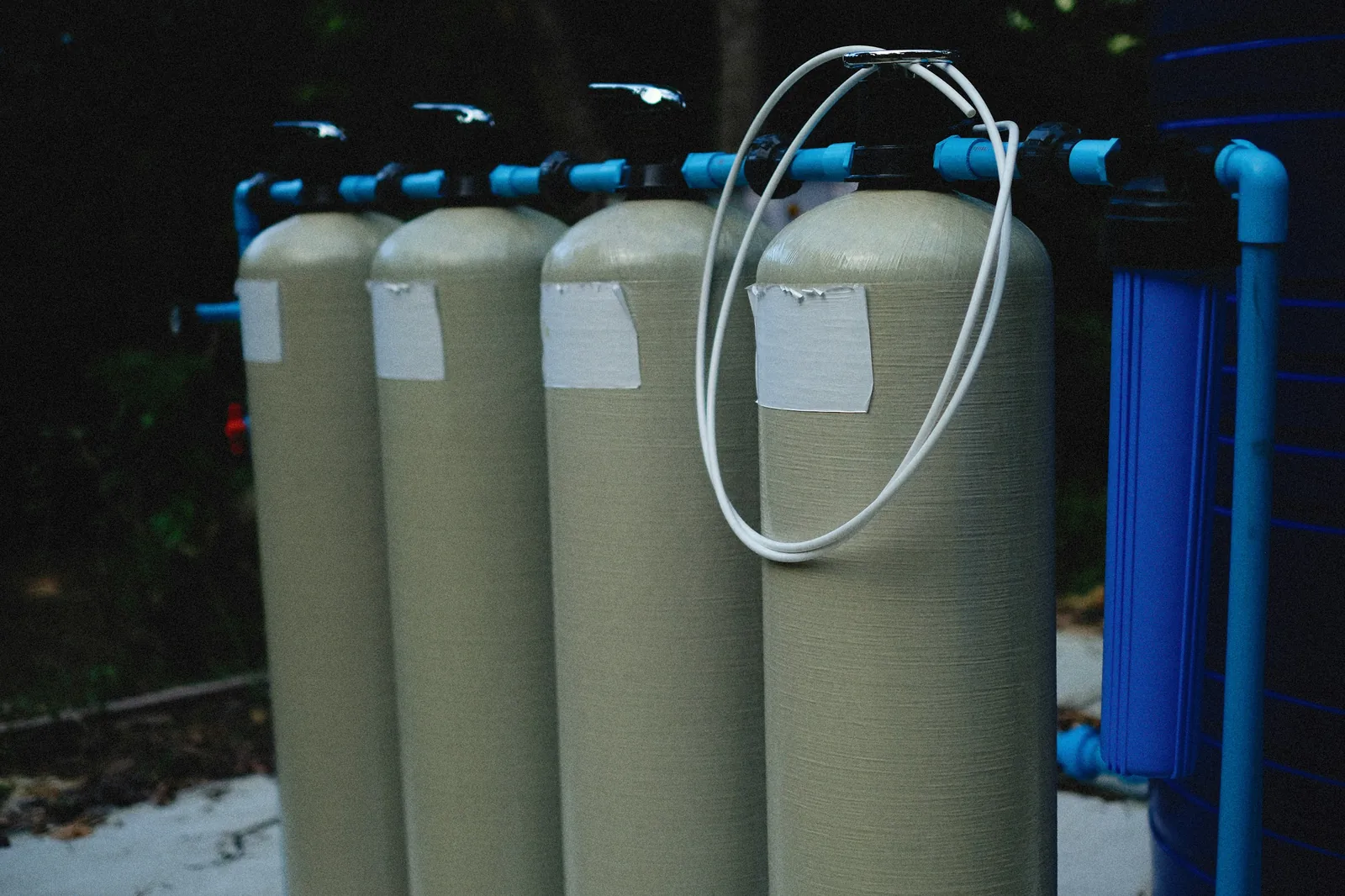
Carbon is the workhorse for chlorine taste and odor. It comes as replaceable cartridges or as a larger tank of carbon media. Tanks hold more media and generally go longer between service; cartridges cost less up front. Learn more about carbon filtration.
Whole house filter + softener combo
With water as hard as the published Utah County figures, this is the most common setup: a filter for taste, odor and sediment, and a water softener for hardness.
Specialty media for well water
Iron, manganese and sulfur (“rotten egg”) smells need media made for those problems. These are most common on private wells. See well water treatment.
Whole house reverse osmosis
Whole house RO exists, but it’s rarely needed on city water. It’s expensive, wastes water and needs a storage tank and repressurization. For drinking water, an under-sink reverse osmosis system does the job for far less.
Whole house water filter cost and upkeep
We quote after we know your water and your plumbing. The main things that move the price:
- System type: cartridge housings or a carbon tank
- Flow rating, sized to your home
- Whether you add a sediment pre-filter
- Whether you pair it with a softener
- Plumbing work at the main line, like adding a bypass and shutoffs
Upkeep depends on the system. Cartridge systems need new cartridges on a regular schedule; tank systems need their media replaced less often. How fast filters wear out depends on how much water you use and what’s in it. Your quote will spell out the upkeep for the system we recommend.
What installation looks like
- Tell us about your home and water: city or well, household size, and what you’re noticing (taste, smell, spots, sediment).
- Get a recommendation and quote by phone or video, with no in-home sales visit.
- Installation. We coordinate the install with a local installer. The system goes on the main line with a bypass and shutoffs, then it’s flushed and checked.
- Walkthrough. You’ll learn how to use the bypass and when to change filters.
The system needs space and access near the main shutoff, usually in a garage, basement or utility room.
Pair it with a softener and drinking water system
A whole house filter is one piece of the picture. For hard water, add a water softener. For drinking and cooking water, add a reverse osmosis drinking water system at the kitchen sink. If chlorine taste is your only concern, carbon filtration may be all you need. Not sure what fits? Request a free quote from home.
Whole house water filter FAQs
Do whole house water filters actually work?
Does a whole house water filter soften water?
Do I need a whole house filter if I have a softener or reverse osmosis?
Will a whole house filter lower my water pressure?
How much does a whole house water filter cost in Utah County?
How often do whole house filters need to be changed?
What are the disadvantages of a whole house water filter?
Get a whole house water filter quote
Tell us about your home and your water, and get a recommendation by phone or video, with no in-home sales visit. Serving Spanish Fork, Springville, Payson, Salem, Santaquin and Mapleton, plus the rest of Utah County. City names link to each city’s own water report.