
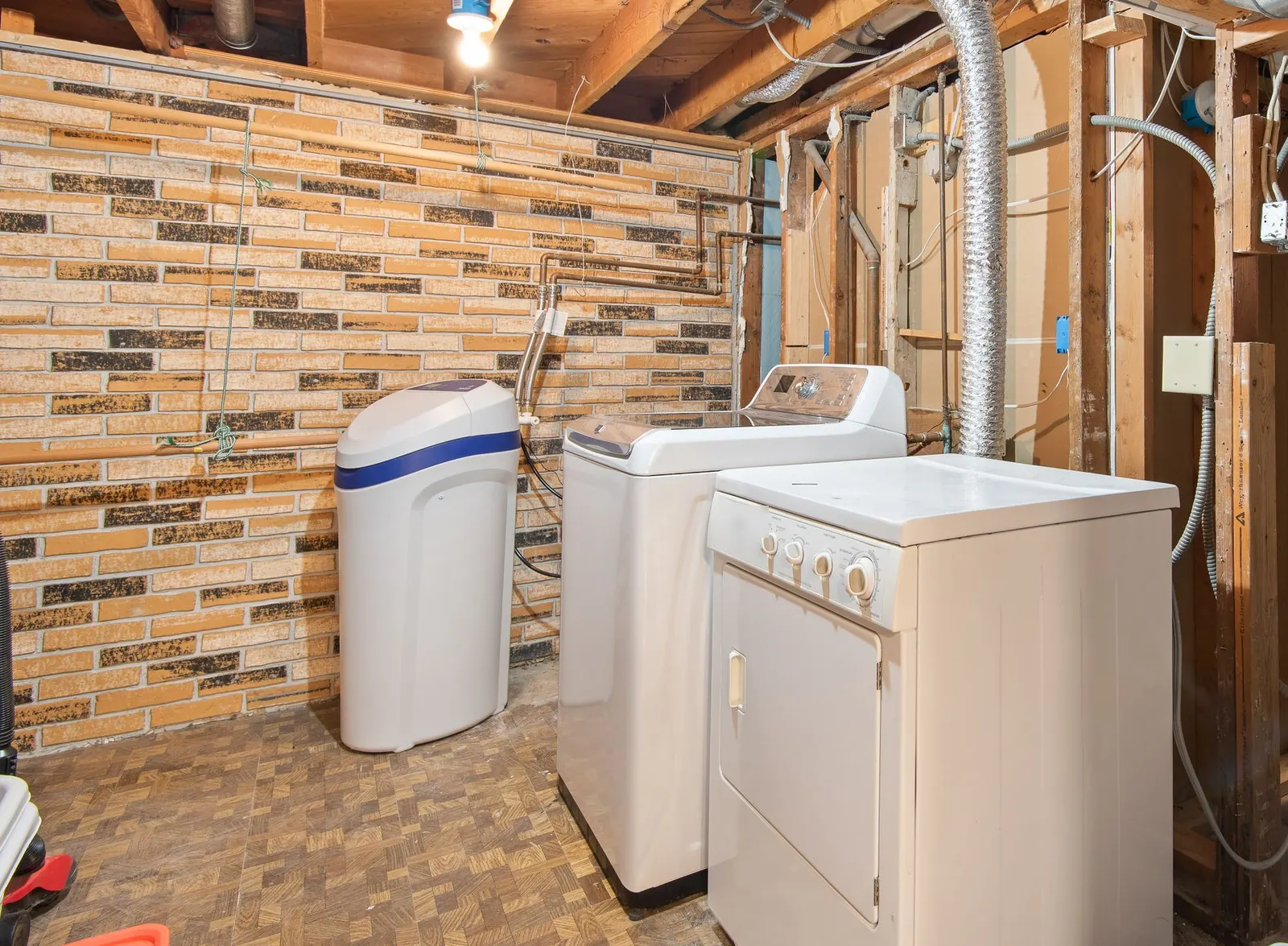
Water Softener Installation in Utah County, UT
Most Utah County homes have very hard water. Payson City lists 11.7 grains per gallon, and a 2018 Mapleton City study measured about 11 to 19 gpg, both above the 10.5 gpg very-hard line. A water softener removes the calcium and magnesium that cause scale. Ease Home Services sizes the softener to your water and your household, quotes it from home by phone or video, and coordinates the installation with a local installer.
How hard is the water in south Utah County?
Here’s the honest starting point: most cities in south Utah County don’t publish a hardness number in their annual water report. Only two do. That’s why a softener should be sized to a test of your own tap water, not to a chart you found online.
| City | Published hardness | Source |
|---|---|---|
| Payson | 11.7 gpg (about 200 mg/L), listed as “very hard” | Payson City water page (no sample date given) |
| Mapleton | About 11.1–18.7 gpg (189–320 mg/L) across 10 sampling points | Mapleton City water quality study, sampled in 2018 |
| Spanish Fork | Not published in the city’s 2025 report | 2025 water report |
| Springville | Not published in the city’s 2025 report | 2025 water report |
| Salem | Not published in the city’s 2024 report | 2024 water report |
| Santaquin | Not published in the city’s 2025 report | 2025 water report |
The U.S. Geological Survey calls water over 180 mg/L (about 10.5 grains per gallon, or gpg) “very hard.” Payson’s published 11.7 gpg and every Mapleton sample in the 2018 study are above that line.
You’ll also see much higher numbers online. Several water-treatment websites list Payson at 25 gpg, while Payson City itself publishes 11.7 gpg. When published figures disagree that much, a test of your own tap is the number worth trusting.
All six towns draw on groundwater from springs and wells, and groundwater picks up calcium and magnesium as it moves through rock. If you’re on city water and also want to deal with chlorine taste, see our city water treatment options.
Not sure of your hardness? Tell us when you request your quote and we’ll talk through how to get it measured.
How a water softener works
A standard softener uses ion exchange. Water flows through a tank of resin beads that grab calcium and magnesium and release sodium (or potassium) in their place. The water that comes out the other side is soft.
When the beads fill up with minerals, the softener regenerates. It rinses the resin with salt brine from a separate brine tank, flushes the minerals down a drain, and is ready to go again. A control valve on top decides when to regenerate, either on a timer or based on how much water you’ve used.
A softener needs a drain and a power outlet nearby, and it should have a bypass valve so you can shut it out of the line for service without turning off water to the house.
What size water softener do I need?
Softener sizing comes down to one simple formula:
Here’s a worked example using Payson’s published 11.7 gpg. At an assumed 75 gallons per person per day, a family of four uses about 300 gallons a day. 300 × 11.7 is about 3,500 grains of hardness the softener has to remove every day.
The softener’s capacity then sets how often it has to regenerate. Too small, and it regenerates constantly, uses more salt and water, and can let hard water through. Too big, and you pay for capacity you don’t need. The goal is a unit that handles your daily load comfortably between regenerations.
Homes on a private well may also have iron, which adds to the load and changes the setup. If that’s you, see our well water treatment page.
The bottom line: we size from your water and your household, not from a city average.
Salt-based vs salt-free: which works for Utah County water?
Salt-based softeners (ion exchange) actually remove the calcium and magnesium. Your water tests soft afterward, and you get the full benefits: less scale, fewer spots, better lather.
Salt-free conditioners (often called TAC, or template-assisted crystallization) change how the minerals behave so they’re less likely to stick as scale. They don’t remove the minerals, so your water still tests hard and spots on glass and fixtures can remain.
With water as hard as the published Utah County figures, it’s worth knowing exactly which type you’re being quoted. We’ll explain the difference plainly and recommend what fits your water.
A note on sodium: softened water picks up a small amount of sodium in proportion to how hard the water was. If you’d rather not drink it, a reverse osmosis drinking water system at the kitchen sink removes most of it, and potassium chloride can be used in place of salt in many softeners.
What installation looks like
- Tell us about your home and water. Household size, your hardness if you know it, and where the main line and any softener loop are.
- Get a recommendation and quote by phone or video, with no in-home sales visit.
- Installation. We coordinate the install with a local installer: the softener goes in with a bypass valve, a drain line and the brine tank, and the valve is programmed for your water’s hardness.
- Walkthrough. You’ll learn how to add salt, use the bypass and check the settings.
Many homes already have a softener loop, a plumbed spot ready for a softener. If yours doesn’t, a loop or a short plumbing run is added, and that’s factored into your quote.
Pair your softener with filtration and drinking water
A softener handles hardness, but it doesn’t remove chlorine taste or odor. For that, many homes add whole-home water filtration or carbon filtration. For drinking and cooking water, a reverse osmosis drinking water system at the kitchen sink is the usual choice. Not sure what fits? Request a free quote from home.
Water softener FAQs
How hard is the water in Utah County?
What size water softener do I need?
Is softened water safe to drink?
Salt-based or salt-free: which is better for Utah County water?
How much does a water softener cost in Utah County?
What maintenance does a water softener need?
Does a water softener remove chlorine or filter my water?
Get a water softener quote
Tell us about your home and your water, and get a softener recommendation by phone or video, with no in-home sales visit. Serving Spanish Fork, Springville, Payson, Salem, Santaquin and Mapleton, plus the rest of Utah County. City names link to each city’s own water report.